Have you ever wondered what it is like to become a Theology Master? As I work toward my MA in Theology, I will share insights, stories, ideas, and strange happenings.

Friday, February 7, 2014

Is Ham’s version of creationism theologically viable?


 One blogger likened the debate between Bill Nye and Ken Ham to the experience of being invited to a basketball game only to realize that the host brought tennis rackets instead of basketballs.  This is perhaps the best analogy for the debate.  The subject was, “Is creation a viable model of origins in today’s modern, scientific era?”  Bill Nye arrived ready to talk about science.  Ken Ham, on the other hand, came with tennis rackets ready to talk about theology.  He began his opening statement saying that, “The creation/evolution debate is really a conflict between two philosophical worldviews…”[1]  With that statement he threw science out the window and began to explain his philosophical position.

Pulling in short videos from actual scientists who also happen to be young earth creationists, it was as if Ham organized the debate to simply say to the world, “Hey we do science too!”  His main argument was that creationists do excellent “observational science” but they disagree with Nye about “historical science.”  With this novel approach Ham insisted that whatever secular scientists (by that he means mainstream science) or creationists (by that he means his school of thought) say about the past is only speculation at best.  They can use the same observed data and come to different conclusions about the past. And that’s ok, because none of us were there!

As a viewer, I became excited that Ham would then use this observational science to show how the earth and the universe could be about 6,000 years old.  That would, after all, stick to the subject of the debate.  Instead Ham explained that we know the universe is only 6,000 years old because the Bible says so.  The Bible is the word of God, so we should trust it. 

Nye on the other hand, focused on the subject of the debate and gave example after example of scientific observation that pointed toward a 13 billion (or so) year old universe.  IF this were a science debate, Ham would have carefully considered these examples and shown how they really point toward a young universe.  Oh the joy I would have had IF it were a science debate.  Instead, Ham began huddling behind his podium like a young child saying, “Nuh ah, the Bible says the universe is young, and I trust that more than science.” Bill Nye summarized it well when he said, “I give you lion’s teeth, you give me bible passages.”

Needless to say, I was unimpressed, though not surprised by the debate.  The Science Guy talked science and the Fundamentalist Christian Guy talked theology…kinda.  Many times I turned to my wife and said, “Ken isn’t debating science with Bill anymore! He’s trying to debate theology with me!”  And so to honor the sneaky true spirit of the debate I would like to raise the following debate question:

Is Ham’s version of creationism theologically viable?

From the debate about science, I learned these fundamentals about Ken Ham’s faith:
    
  1. The Bible is the foundation for Christian faith.
  2. The Bible is the Word of God.
  3.  Jesus believed in a young earth/six day creation.
  4. When the genre is historical narrative (Gen 1 and 2), the content of the Bible gives infallible scientific truth.
  5. The Bible is a unique book that gives more answers than any other religious book.

Let’s consider these points in reverse order.

5.   The Bible is a unique book that gives more answers than any other religious book.  Ham’s elaboration on this belief came with the last question of the debate, “What more than anything do you base your beliefs upon?”  He wanted Nye and us viewers to be impressed by the uniqueness of the Bible in trying to answer ultimate questions in life: Where did the universe come from?  Where did humanity come from?  Why is there sin?  Isn’t it fantastic that no other religious book grapples with these questions? I mean other than the Quran.  And the Vedas. And the Tipitaka.  And the Babylonian account of creation, Enuma Elish.  In this creation account divine spirits pre-exist creation.  The world is created in this order: light, firmament, dry land, heavenly lights, and humans.  When it was complete, the gods rested.[2]   Please don’t misunderstand, the Israelite description of YHWH’s creation takes these abundantly common themes and reinterprets them to cast a new vision of their God.   But we cannot claim that Genesis’ cosmology is particularly unique.  In fact it was quite common (and unlike our contemporary cosmology).

Taken from Reading the Old Testament, 115

4.  When the genre is historical narrative (Gen 1 and 2), the content of the Bible gives infallible scientific truth.  When asked if the Bible should be taken literally, Ham fumbled about to ultimately affirm that historical narrative (into which he believes Gen 1 and 2 belong) should be taken literally and do give reliable information about that history.  There are two significant assumptions in this affirmation.  Firstly, that historical narrative gives infallible scientific truth.  Scripture is primarily a theological book that gives theological insights into historical events.  Even in the case of historical narrative, the purpose is not to give some objective view of what happened (an altogether Modern expectation of historical documents).  Rather the authors and the communities that read the narratives are interested in what it says about God and their community composition.  It assumes the prevalent cosmology and interprets God’s interactions with His people.  For example in Joshua 10:13 (historical narrative) we read that the Sun stood still and the Moon stopped.[3]  Are we to reject the heliocentric view of our solar system because the Bible says that the Sun moves around the earth and thus has the capacity to stop in its orbit?  I hope not. Obsessing over the scientific and historical validity of this passage misses the point of v 14, “Surely the LORD was fighting for Israel.” 

The second assumption is that Genesis 1 and 2 are historical narrative.  Given the repetitive, poetic, hymn-like structure many interpreters do not consider this to be historical narrative.  The fantastical elements like talking serpents, clay-idol humans, and trees that bear virtues as fruit, lead most to conclude that this is a mythological piece meant to vividly and pictorially depict a theological view of the person and creation.  It actually reads better as a polemical piece against the creation accounts of Babylon and Egypt than it does as a historical or scientific textbook.  In my opinion, while Ken Ham obsessed over secular humanists hijacking the word “science,” I would suggest that Ham hijacked this obviously mythological narrative.

3. Jesus believed in a young earth/six day creation.   For rooting everything he believes on the Bible, this is simply an incredible statement for Ken to make.  The basis of this point is that Jesus referenced the creation accounts to make a historical statement.  Matthew 19:4-5, “ He answered, ‘Have you not read that the one who made them at the beginning ‘made them male and female,’ and said, ‘For this reason a man shall leave his father and mother and be joined to his wife, and the two shall become one flesh’?” Ken said, “He quoted from Genesis as literal history.”  We can say for certain that Jesus quoted from Genesis.  But putting words into Jesus’ mouth that Genesis 1 and 2 is literal history?  Isn’t that what we call eisegesis or rather, “making god in our own image?”

2.  The Bible is the Word of God.  It would seem that I would need to add very little here, but I wanted to cast a nuanced view. A simple question may be, “What is the word of God in the Bible?”  The Word of God came to John in the wilderness (Luke 3:2). The crowds pressed in to hear Jesus preach the Word of God (Luke 5:1). In the parable of the sower, the seeds represent the word of God (Luke 8:1).  In John’s prologue Jesus is the word of God (John 1).  One way the New Testament treats the “word of God” is that it is not a book at all.  The word of God is a revelation of God or in the case of John, the word of God is a person.  In the incarnation, Jesus is the definitive word of God.  Jesus is the “fullness of all Revelation.”[4]  In the person of Christ (not a book) God is made known and effects change in the world.  The New Testament contains primitive witness to the Christ event.  Yet the New Testament never claims to possess the entirety of divine revelation nor the entirety of the Christ event.  In fact just the opposite is true: “But there are also many other things that Jesus did; if every one of them were written down, I suppose that the world itself could not contain the books that would be written” (John 21:25).

1. The Bible is the foundation for Christian faith.  What then is the foundation of the Christian faith?  Lest we succumb to idolatry, the foundation of the Christian faith is not a book, but a person: Christ.  It is Christ whom the Church preaches (1Cor 1).  This is why when Ken was asked if anything would change his mind, I was astonished to hear that he went back to a defense of a book.  He insisted that his view of Genesis would never be disproved and thus he would never change his religious beliefs.  But the New Testament insists that our faith is in vain, not if Genesis 1 and 2 is not taken as science, but our faith is in vain if Christ has not been raised from the dead (1Cor 15).  Our Christian faith rises and falls on Christ.  When Christ ascended to the Father, He did not drop a book from heaven.  Christ sent the Holy Spirit to guide the Church and lead it into all truth (John 16:13).  It was the apostolic preaching of Christ done by the Church, empowered by the Holy Spirit that spread the message of salvation.  This occurred before the New Testament was written.  For a few hundred years there was not even consensus about what made up the New Testament.  Christ is the foundation for Christian faith, not a book.


Bill Nye keenly pointed out that Ken Ham is a minority with his dealings with science and his approach to Christianity.  Is Ham’s version of creationism theologically viable?  By misinterpreting and misrepresenting the genre and theological thrust of the creation accounts, by putting words into Jesus’ mouth, and by coming close to a bibliolatry, Ham’s approach is not theologically viable.  Scripture is a source for truth about God, but the extra-biblical assumption that it contains all truth about history and science is simply that: extra-biblical.  It is outside the scope of what the Bible claims for itself and outside the rich intellectual tradition of the Church.


[1] Please note that this wasn’t a debate between evolution and creation or creationism.  It was a debate as to the scientific viability of Ham’s creationism.
[2] Lawrence Boadt. Reading the Old Testament: An introduction.  (Paulist Press: New York, 1984), 117.
[3] In our contemporary view of the solar system, the sun stands still as the earth rotates and orbits.  For the sun to appear to have stopped in the sky it would be the earth that would have stopped.  But the text says that the sun stopped.
[4] DeiVerbum Paragraph 2.

Thursday, January 9, 2014

Ordination as Metamorphosis pt. 3

As a New Year gift to you, I’m actually going to finish what we’ve started:  The final and last part of my paper on BEING.

We’ve discussed how some Greek guys theologizing about the Trinity said that being isn’t what we are, it’s how we are.  My being is how I relate to people and communities.  We’ve applied this to ordination via the work of Hahnenberg.  The change in being that occurs through ordination is a changed relationship to the church.  The minister is repositioned within the community so that new relationships are formed and thus the minister experiences a change in being.  Finally, I posed the question: Is this compatible with contemporary Roman Catholic theology? 

Let’s build some context here:

 Sacramental Character[1] has its origins in the fourth century with Augustine.  When the bishop’s seat in Carthage was empty, Caecilian and Donatus were candidates to fill the position.  The Donatists argued that Caecillian was not a valid bishop because the bishop that ordained Caecillian had denied the faith.  The question was:  Can a bishop still ordain bishops even though he had previously denied the faith?  Augustine argued that sacraments do what sacraments do because Christ is the one who does them!  He said of baptism that if a murderer, drunkard, adulterer, or even Judas were to baptize, the baptism would be valid because it is actually Christ who acts in the sacraments.  It’s not the priest/bishop who does it, but Christ. If sacraments depend primarily on the grace of Christ and not the ability/honor/character/moral-integrity of the priest, or the person who receives them, then Christ puts a seal on our souls that we cannot undo because it never depended on us in the first place!

Aquinas compared sacraments to a military seal.  Soldiers received a mark on their bodies that showed that they belonged to this or that army.  Even in the case of discipline, the mark is never removed.  So Aquinas said that the sacramental seal is more lasting than a mere military bodily seal.  The Council of Trent (and Martin Luther for that matter) affirmed an irremovable sacramental seal. Vatican II affirmed the seal. The Catechism of the Catholic Church affirms the seal!  Ordination is an “indelible spiritual character and cannot be repeated or conferred temporarily.”[2] 

Much could be said about this Western approach but one thing is certain: baptism, confirmation, and ordination seal the recipient.  This seal is permanent and thus it cannot be repeated or undone.  Ordination as changing relationships fails to account for this permanence. If a priest is a priest through being in a priestly relationship with the Church, it would follow that he would cease to be a priest if he were to be separated from the Church (through choice or discipline).  What is needed is a relational approach to the sacramental character combined with permanence.

This is where I think I’ve made some contributions by turning to a postmodern context.

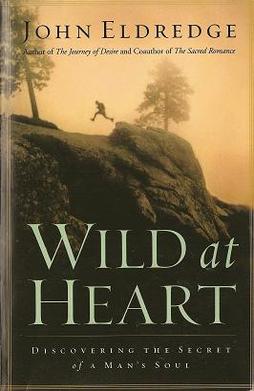
In our contemporary situation, there is a rising awareness that my experience is not normative for everyone.  With globalization came instant access to people who are strikingly dissimilar to me.  Even categories that we once believed were so certain have encountered wide diversity.  It is obvious today that to be a Christian no longer means living in the North-Western part of the world, singing European hymns, reading the Bible in English, and having cozy church buildings.  The dominant image of the Christian person has been challenged because of the awareness of the huge diversity of Christian experience around the world.  It is now impossible to speak with certainty about THE Christian experience.  This awareness saturates and transforms every all-encompassing image and story that tries to make sense of EVERYTHING.  An example of this can be found in something like the book by John Eldridge, “Wild at Heart.”  It purports that all men have an intrinsic nature or desire for x,y,z.  We all like to fight or something wild like that.  The book tries to have an over-arching, all-encompassing understanding of masculinity. But the reality is that the experience of men is so diverse that I cannot boil down the “experience of Men” to my experience or the experience of most men.  What we end up doing is telling a story in which “all men” is actually just “me.” Postmodernity rejects these grandnarratives. 


It is exceedingly difficult to try to describe the “human experience” that is actually common to all humans.  Even the North American human experience is impossible to capture with a single narrative.  The more honest I become, the more I realize that I can hardly capture my own human experience with a single narrative.  With what certainty can we begin to discuss the substance of the human?  What is the overarching ousia that every human shares in common?  Is there a substance that every priest around the world shares in common? The Greek concept of substance seems altogether insufficient to capture the wide diversity of experiences today.

A theologian named Friedrich Schweitzer discussed the postmodern life cycles.  In Modernity, adolescence was the time to develop the “self.”  Who you are, what you value—in short: your identity.  It was expected that you would form one single coherent identity within which you would enter adulthood.  In postmodernity, we have many roles and in each role we sometimes have a different identity.  All of the identities may not form a cohesive whole so we are sometimes living in a paradox of identities.  We begin to be formed by our relationships.  In Postmodernity we should not speak of the individual or whole self, rather we should speak about the relational-self or the plural-self.

As a relational/plural-self, the one who is ordained enters into new roles and relationships that will form new identities within the church.  A Modern perspective may expect the identities to be smoothly incorporated into the unified self so that we can distinguish a total change from one being to another (Unified Baptized Christian=>Unified Ordained Priest).  The relational/plural-self of Postmodernity is repositioned in the community through ordination thereby forming new relationships.  The new relationships would form new identities that are added to the already existing plurality of self. In Postmodernity the sacramental character of ordination may consist not so much in a transformation of being, but an addition to being.  The new identity formed in the Church community creates additional ways to be.

I would like to turn for a moment to the concept of narrative in Postmodernity.  My narrative is the particular story that I entered into at birth.  There is an inevitability to my narrative—I was born at a particular time and place into a context that I had no control over.  In a way it belonged to other people.  As soon as I entered, it became my narrative through which I experience the entire world. As it becomes my own it becomes utterly unique, though it is shared with others. In Postmodernity there is an awareness that truth is only meaningful to me within my narrative.  This is what Hahnenberg calls a radical contingency.  My narrative encounters the Christian narrative in a way that is meaningful, but it could have been otherwise.  Think for a moment what it would be like if you were born on the opposite side of the world.  You’re narrative would be completely different and you would probably find meaning through a different religious experience.

Looking at the work of Lieven Boeve, Hahnenberg explains the significance of the “open narrative.”  The open narrative is sensitive to the otherness of the other.  The other is so other that I cannot fit their narrative neatly into mine.  “To do so is to destroy the other as other, to make ‘you’ into some version of ‘me.’”[3]  It is an abuse, and a reduction.  What they mean is something like this:  I am a John Eldridge Wild-at-Heart man.  I see another man who is chronically depressed, dissatisfied with his job, and seems to lack purpose.  A closed narrative would assume that my narrative contains all I need to know about manliness.  To be happy this guy needs adventure in his life.   I decide what this guy needs is to come backpacking in Colorado with me.  We’ll fish, hit the trails, and set up camp when our hearts decide. What does this guy need to be content?  He needs to be more like me!  In that closed narrative, I did not allow the man to be different than me.  I did not allow him to be other.

For Boeve, the Christian narrative is an open narrative.  Basil insisted that the substance of God is veiled in light so incomprehensible that we cannot contemplate it.  Christianity is at its root an open story to the inexhaustible mystery of God.  “Precisely because Truth transcends our narrative, our story must remain open.”[4]  The Christian story must remain open to God who is Other, but it must also be open to other human narratives.  Christ called his disciples from the closed confines of their own limited experiences to embrace the other in love.[5]  “We meet the mystery of God in the mystery of the other.”[6]
Boeve speaks of the intersection of two narratives as the “interruption” of the other.[7]  This sometimes happens without intentionality. The other’s narrative meets our narrative, and we are faced with an interruption in our own story.  “Thus an interruption is not destructive. It is transformative—if we are open to it. Our stories go on, but they go on changed.”[8] 

A Christian may encounter the depressed guy and think that her narrative can fix him up.  What he needs to come out of his depression is to find Jesus.  If he has a saving faith in Jesus, he will have a better outlook, and he may look for opportunities to minister at work.  But that closed narrative will destroy the man as “other.”  To have an open narrative capable of interruption is to have the humility to say, “I don’t know what this guy needs.  I suppose I should get to know him.”  Perhaps at the end of your encounter with him, it will be your narrative that has changed, not his. (Probably both narratives will change)

This represents a closed (but optimistic) narrative.  The Church has been given all Truth.

This represents an open narrative. The Christian narrative has enough truth to be meaningful, but certainly not all Truth.  To try to make the red narrative fit into the blue narrative would be to make it cease to be its own unique story all together.


This is what I’m suggesting with all this open/interruption narrative talk: 

Ordination in postmodernity can be seen as the intersection of two narratives—an interruption.  Dennis is ordained within a Christian community.  This means that his relational/plural-self is put into a new relationship with the Church.  New relationships mean new identities.  He’s experienced a change in being.  Not only has his being been changed, his narrative has been interrupted.  His narrative has been interrupted by the narrative of the community, the narrative of the Church, and the narrative of Christ.  Having experienced an interruption, his narrative, indeed his identity, will always remain changed.   In this way, the postmodern person experiences an indelible change in being through ordination.  Roles may change within the Church, relationships with ecclesial institutions may grow or be severed.  Still, the narrative of the relational/plural-self will forever be changed. 
               
This is my suggestion of reconciling the ontological change through changing relationships with the indelible sacramental character that is so potent in the Western Church.  Let me know what you think.

As for you, I encourage you to open up your narrative.  Unless you’ve attained, contained, and comprehended the vast mystery that is God, you must keep searching.  Your tiny little narrative (however vast/universal you may think it is) has only begun to probe the depth of God’s truth.  Allow other people to be other than yourself.  You will never know another person by fitting them into your narrative.  Allow them to interrupt your narrative, to broaden your scope, to help you see the world differently.


[1] The idea that we are permanently sealed/changed by the Grace of the Holy Spirit through the sacramental encounter.
[2] Catechism of the Catholic Church, 2nd Edition. Paragraphs 1581-1584.
[3] Edward Hahnenberg. Awakening Vocations. (Minnesota, Liturgical Press. 2010, 170.
[4] Ibid 171.
[5] Ibid 172.
[6] Ibid 173.
[7] Ibid 177.
[8] Ibid 177.

Friday, December 20, 2013

Ordination as Metamorphosis Pt. 2


Feeling particularly festive today, I thought I would write a Christmas song about our last post:

In the last post on being my true love gave to me,
Seven headaches
Six images
FIIIIIVE arguments about ontology
Four footnotes
Three Hypostasis
Two terms for being
And a saint punching Arius in the head

Merry Christmas!  Perhaps the song makes the last post sound more fun than it really was…  If you found it to be a little too ethereal, I promise this one will be particularly relevant to YOU (yes you).

The very simple point that I was trying to make was: The Cappadocian’s argued that being is not rooted in substance (what a being is).  Being is rooted in personhood (how a being relates).  To talk about your being, we should talk about your person, the multiple ways you relate!  See how simple that was?

Recall for a moment the insights of my brother-in-law who reflected on being a father as he began to relate to his family.  Fatherhood, in the story, involved function, and ontology.[1]  As soon as the firstborn came, he had a radically new function.  He had to do all those things that are required to keep a little baby alive.  Can we say that Fatherhood is reducible to only what the person does?  Richard is a Father only as much as he does what a Father should do? I wouldn’t think so.  Fatherhood is also who a person is.  Even when a Father doesn’t function as a Father (sadly we have far too many examples of this), a Father is always a Father.  Fatherhood involves a change in being.  My brother showed that he became a Father as he interacted with his son; as he related to his family.  The change in being didn’t occur on the level of substance (Richard’s substance wasn’t changed into a Father).  The change in being occurred on the level of personhood. Remember what we said last time: “In the Trinity, there is no personhood without relationship.  There is no being without relationship.”

This tension between function and being takes place in conversations about ministry.  Some religious traditions insist that their pastor is no different than anyone else in the congregation.  The pastor simply takes on a new role in the community.  She now preaches, leads ministries, counsels, celebrates sacraments, etc. Who is the minister?  The one who does these certain things.  Other traditions (Orthodox and Catholic) insist that the pastor not only has a new function, but is a different being.   A pastor receives a mark on his soul forever conforming him to Christ, the priest. Who is the minister? The one who IS a priest.  In this dichotomy, both sides have some drawbacks.  The functional side succeeds in keeping the pastor in relationship to the community.  You can’t function as a pastor without a church!  But it also fails to recognize the shift in identity brought about in a pastor.  The “ontological” side succeeds in understanding the transformation of the individual through the grace of the Holy Spirit.  But it tends to individualize and isolate the ordained person.  A priest is a priest with or without the church community.  This tends toward a “divinization” or at least a “reverence” for the priest who is perceived as altogether different than the normal member of the church.

The pastor is given a new role or function within the community.  In this model, the pastor could return to the community, and a new pastor could be selected.
The priest is ordained by the grace of the Holy Spirit.  The priest experiences a change in being, and then is given a specific church to minister with.


A theologian named Edward Hahnenberg has tried to overcome this dichotomy between function and ontology by looking at the Cappadocian understanding of being.  He says that when a person becomes involved in a ministry within a community, her relationships with others and the ecclesial community shift.  If being is rooted in personhood, these changing ecclesial relationships mark a change in being for any minister.  Using this Trinitarian, relational perspective Hahnenberg overcomes the dichotomy between function and ontology.  Ministers are not identified in isolation as individuals, nor are they identified solely by what they do. “[…] important ministers come to be both through what they do and who they are within a community.”[2]

Hahnenberg uses the language of “ecclesial repositioning” to describe the changing relationship within the community.  The ontological change that occurs in a minister is directly related to one’s ecclesial position.  The ecclesial position consists of three facets: the commitment of the individual, the recognition of the community, and the ministry one is involved in.[3]  The difference between an ordained priest and a lay youth minister is a difference of ecclesial position.  The commitment, ministry, and church recognition are different for each.  However, both experience a change in being because of a change in ecclesial relationships.  Viewed this way, priestly ordination is not about the power one possesses, or a beautiful mark on the soul.  The sacramental character of ordination becomes one’s ecclesial position.  “The laying on of hands and prayer at ordination mark the climactic moment of a process of recognition and repositioning in which the new minister is transformed through her or his relationships of service within and on behalf of the community.”[4]

Taken from "Ministries: A Relational Approach" page 131.


According to this relational model, a minister experiences a change in being because a minister’s relationship to the church shifts.  This model does not require that a minister has a change in substance, only a change in person.  This is a bridge between function and ontology because the minister’s being is rooted in the relationships the minister finds him/herself in.  The relationships involve roles and function, and makes up who the minister is.  My brother-in-law became a Father through relating to his son.  His being was defined by the relationship, which involved the specific function he fulfilled.

Because the Church is already abundantly graced by God, the ordained receives the grace of the Holy Spirit through the Church.  The ordained is repositioned within the community which forms new relationships.  This change in personhood is a change in being.


Hahnenberg is very successful in applying this ancient Greek understanding of being to the question of sacramental character.  The Sacramental Character is the changed relationships.  The large lingering question remains:  Is this compatible with the contemporary theology of ordination in the Roman Catholic Church? Is being-in-relation adequate enough for a Western, contemporary theology.  We will explore this further next time.

I promised you personal relevance, and I will try to deliver.  At first glance, I can see two important implications.

1. You are your relationships.   The Enlightenment gave the West the awareness of the “I.”  I am an autonomous person who is morally responsible for my own actions and I must construct myself.  Well the Enlightenment also took away our relatedness.  The “I” became the primary starting point for….EVERYTHING.   We are still living this individualism each day, and by now, it’s inevitable.  There’s no going back.  I am the main character in my life, and you are the main character in your own life.  We can’t undo it, but we can try to recover something important.  There is no such thing as the isolated “I.” The Cappadocian’s teach us this.  The way you think, the way you talk, the meaning you find in your own life, has come to you because of your relatedness to other people.  You exist because two people abandoned their autonomous selves to give to each other.  From an act of relating love, you came to be (I hope you think about that next time you hear a discussion about sex).  Your existence starts there, and it doesn’t end there.  John Zizioulas says that to be is to move from an individual to a person.  You will find yourself as a dynamic person by extending outward in love in relationship to other persons.  Not only is this the route to happiness, but it is the route to existential contentment.  You find your individual self, by extending out of yourself in relationships.

2. The Christian in isolation does not exist at all.  What we know of God is how he relates to us.  The center of the Christian story is that God is continually extending beyond himself to relate.  Creation is an act of relating. And of course the Incarnation which we contemplate anew in a few days is the activity of a God relating to us.  The “we” that I speak of is the church which was primitively thought of as the body of Christ where Christ is the head.  To find life, to find meaning from the head, you necessarily must be related to the body.  To be related to the body, is to experience changing relationships, changing personhood, and thus, your very being is changed.  Your being as a Christian is rooted in your relating to Christ through the Church.   This has many ramifications, but here is what I have to say for Christmas:

Do not look for Christ in isolation; look for Christ in the other.  For however messed up the institution of the Church can be, it is there in the body of Christ that you will find Christ extending himself in love.  Secondly, look for Christ in the other in whom you wouldn’t expect Christ to be found.  It is through solidarity with that person that you will find Christ, and in relating to that person, you will exist.

Have a prayerful expectation of Christ’s coming again in Glory as you celebrate His first advent among us.


[1] You remember ontology right?  Ontology is reflection on being.
[2] Edward Hahnenberg. Ministries: A Relational Approach. (New York: The Crossroad Publishing Company. 2003), 96.
[3] Ibid 131.
[4] Ibid 201.